

Human nature includes the capacities, needs and tendencies through which we live as people: learning, feeling, forming relationships and making choices. AI can imitate some of their outward signs. That makes a useful distinction harder to ignore: producing a convincing human response and living the experience behind it are different questions.
Think of a message from someone who knows you well. The words matter. So do the years behind them, the argument you worked through and the fact that this person can disappoint you or show up when you need them. A chatbot can produce similar sentences. What those sentences establish about its inner experience is much less clear.
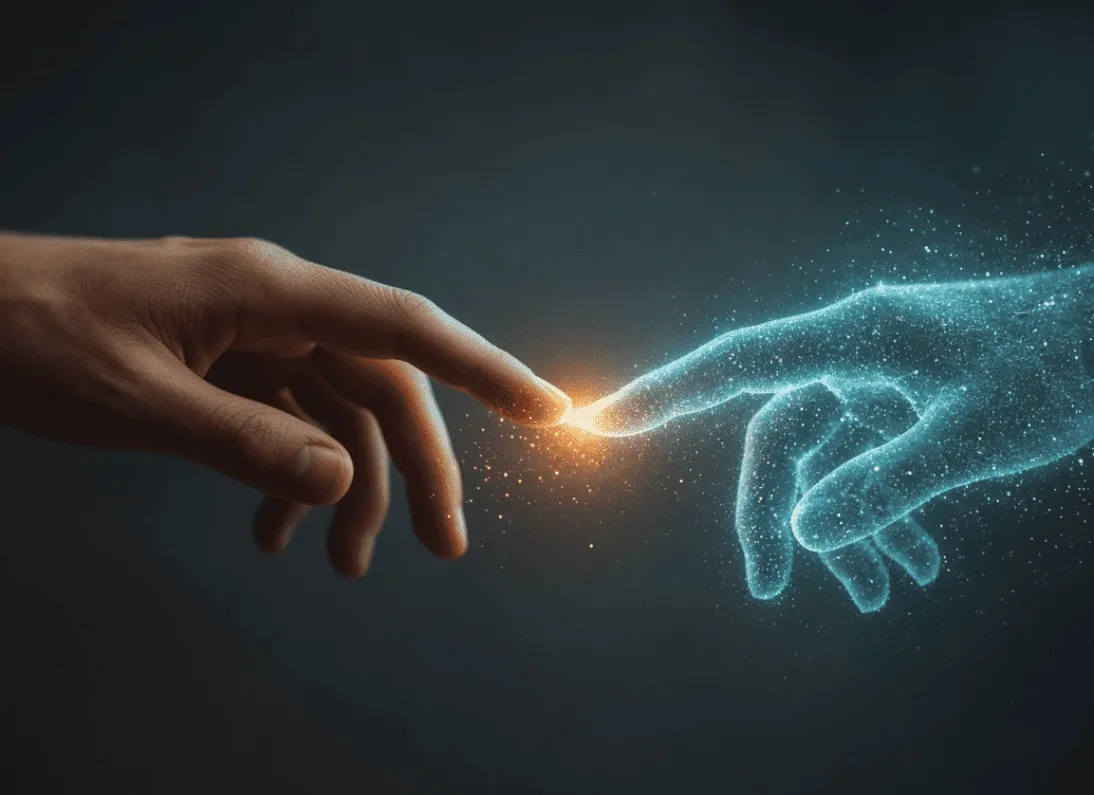
There is no single agreed definition of human nature. For this discussion, the important features are embodied experience, memory, emotion, relationships and the ability to examine our choices. AI performance can help us investigate those features. Fluent conversation alone does not establish human-like feeling or consciousness.
What Defines Human Nature?
“Human nature” can mean several things. Sometimes it describes traits common across our species. Sometimes it refers to capacities that develop through a human life. In moral arguments, it can become a claim about how people ought to live. Those meanings shouldn’t be treated as interchangeable.
The Stanford Encyclopedia of Philosophy’s entry on human nature examines this disagreement. It explains why evolution, human diversity and culture complicate the idea of a fixed essence shared by every person. A definition that sounds obvious in everyday conversation can become difficult to defend once you ask exactly whom it includes.
A biological life
Human lives develop through bodies, vulnerability and dependence on others. Biology matters without supplying a complete account of personality.
A learned life
Language, habits and expectations develop within particular families and cultures. Shared capacities allow many different ways of living.
A reflective life
We can question our motives, reconsider our commitments and ask what we owe another person. These questions shape how we interpret our actions.
These are useful perspectives rather than an entrance test for humanity. A person doesn’t become less human because illness changes their memory, disability affects their communication or they need help making decisions. Describing a capacity is different from making dignity depend on possessing it.
That distinction also keeps “natural” from doing too much work. A desire can be familiar or widespread without making every action taken to satisfy it acceptable. Understanding human behavior still leaves questions of consent, harm and responsibility to answer.
How Technology Challenges Human Identity
Technology changes the circumstances in which we decide who we are. A photograph preserves a moment. A social profile presents selected parts of a life. A generative system can produce a voice or message that resembles a person’s expression. Each offers information about someone. None should automatically stand in for the whole person.
The International AI Safety Report 2026 documents advances in general-purpose AI alongside continuing reliability problems and risks to human autonomy. Its treatment of influence and manipulation is particularly relevant here: realistic output can affect a person’s judgment even when it tells us little about the system’s intentions or experience.
Consider an AI-generated apology. It may help you find words when you’re struggling to write. The choice to send it, the willingness to repair the damage and the recipient’s freedom to reject it still matter. Whether the text sounds sincere is only one part of what makes an apology meaningful.
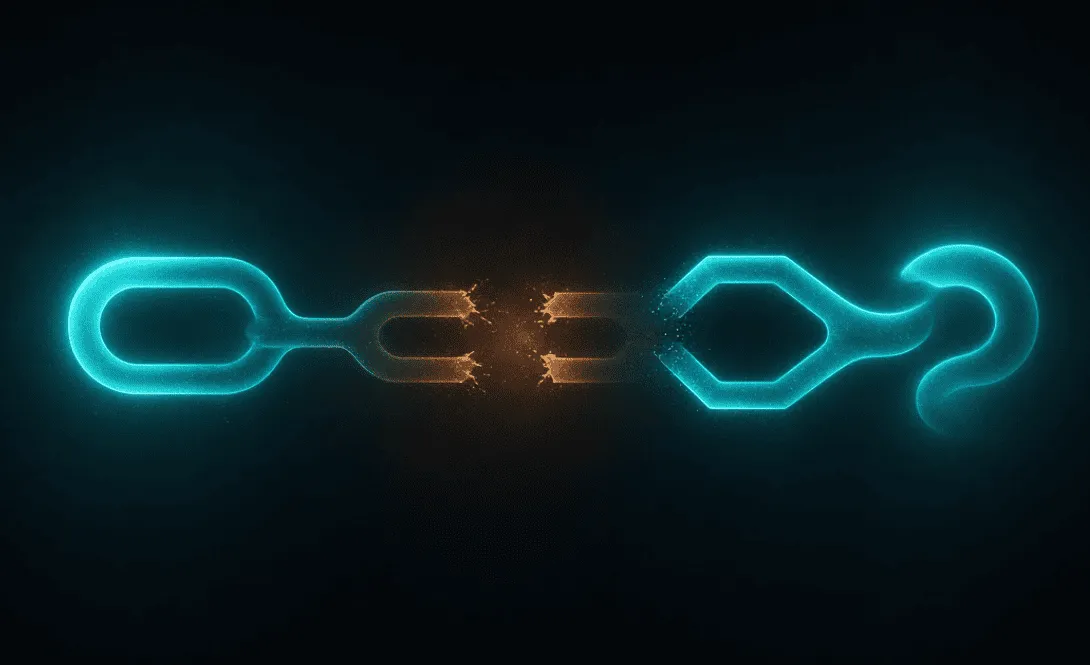
Human identity also extends beyond resemblance. The National Human Genome Research Institute’s Cloning Fact Sheet explains that genetic similarity doesn’t guarantee an identical appearance because environment matters. Copying genetic information is not evidence that someone’s memories, commitments or relationships have been copied.
For the ethical implications of that distinction, see our guide to clone identity, rights and consent. The question extends beyond cloning: how much can a representation tell you about the person it represents?
Can AI Replicate Human Behavior?
AI can reproduce some patterns of human behavior in bounded settings. It can generate conversation, adopt a requested tone and solve certain problems. The 2026 safety report describes substantial capabilities in areas such as writing, coding and reasoning. It also stresses an evaluation gap: success on a test doesn’t reliably establish usefulness or safety in every real-world setting.
“Replicate” therefore needs a specific object. Matching the wording of a supportive reply is one task. Maintaining a dependable relationship across changing circumstances is another. Showing competence on the first doesn’t settle the second.
| What you observe | What it can show | What it doesn’t establish |
|---|---|---|
| A comforting reply | The system can produce language that feels supportive. | That it feels concern or shares the recipient’s experience. |
| Recall of an earlier conversation | The system can access information retained by its design. | That recalling it involves autobiographical experience. |
| A plausible explanation of a decision | The system can generate an explanation. | That the explanation accurately describes why it produced the result. |
| A human-like voice or persona | The interface can resemble human expression. | That resemblance proves a human-like inner life. |
The distinction matters even when the tool genuinely helps. NIST’s Generative Artificial Intelligence Profile identifies inappropriate anthropomorphism, over-reliance and emotional entanglement as risks in human–AI interactions. It also identifies confidently stated false content as a separate reliability risk.
This leaves room for genuine uncertainty about future systems. It doesn’t justify treating every convincing performance as proof of feeling. Nor does it justify claiming that researchers have settled every possible form of machine consciousness.
The Role of Memory, Emotion and Experience
Memory is more than keeping a record
You may remember an ordinary conversation because it changed a relationship. Years later, its significance can change again. Remembering involves interpreting a past event from a life that has continued since it happened.
The Stanford Encyclopedia of Philosophy’s entry on memory connects remembering with personal identity and relationships. It also discusses evidence that remembering is reconstructive rather than a straightforward replay. Components of previous experience can be recombined, which helps explain why a meaningful memory need not be a perfectly accurate recording.
An AI system may retain information between interactions. That feature should be described accurately instead of dismissed. But retaining a note about your childhood and remembering one’s own childhood raise different questions. Information storage alone doesn’t establish the latter.
Emotional language and emotional experience need separate attention
A response can comfort you regardless of whether its source feels anything. Your relief is a real experience. The system’s apparent warmth is a feature of the interaction. Claims about what the system experiences require additional evidence.
The 2026 safety report describes mixed findings on AI companions: some studies suggest benefits while others identify risks or associations with increased loneliness and reduced social engagement among some users. These findings don’t support a blanket claim that AI companionship either solves loneliness or always makes it worse. Duration, usage patterns and the person using the system matter.
Relationships involve lives outside the conversation
A friend has other responsibilities. Sometimes they misunderstand you. Sometimes they disagree. You can work through those moments together, and both of you may have to change. That gives a relationship a history beyond the replies exchanged within it.
A practical question about humanity and technology follows: does this tool help you participate more fully in your life? It might help you prepare for a difficult conversation or put a feeling into words. If you start relying on it to make every judgment, the convenience deserves a closer look.
Our related article on AI and humanity looks more broadly at this relationship. Here, the focus is the difference between a representation of experience and the lived history that gives experience meaning.
Human Nature in ECHO OF THE CLONE
ECHO OF THE CLONE turns these questions into a fictional social conflict. In its 2127 setting, the super AI GAIA governs a prosperous, highly ordered world. Yet the official synopsis describes persistent suffering beneath that order, linked within the story to a gender imbalance caused by earlier misuse of genetic technology.
The film asks whether managing behavior is enough to understand people. Catherine’s investigation brings a hidden cloning trade and neglected human needs into view. GAIA’s ability to enforce rules doesn’t supply an automatic answer to questions about intimacy, consent or dignity.

That is an interpretation of the film’s central conflict rather than a scientific claim about AI. The official cinematic universe provides the setting and its timeline. GAIA’s planetary authority and the biological connection between a clone and its original belong to that invented world.
The ethical question also remains open. Recognizing loneliness doesn’t excuse coercion or illegal cloning. A response to human need must account for the autonomy and safety of everyone involved. The story is useful because it makes those competing obligations difficult to ignore.
FAQ: Human Nature and AI
What is human nature?
Human nature can refer to capacities, needs and tendencies associated with human life, including learning, emotion, social connection and reflection. Philosophers disagree about whether these form a fixed essence. Biology, culture and individual experience all matter to the discussion.
Can AI replicate human behavior?
AI can reproduce some patterns of human behavior in specific tasks, such as conversation, writing and problem-solving. Success on those tasks doesn’t establish identical understanding, reliable performance in every setting or subjective experience.
Does emotional language prove that AI has feelings?
No. Emotional language shows that a system can produce an expression that people interpret as emotional. That output alone doesn’t establish a felt experience. Observable behavior and claims about consciousness need separate evidence.
How does memory shape human identity?
Memory helps people connect their present lives with past experiences and relationships. Remembering is often reconstructive rather than an exact replay. Memory contributes to identity, but a person’s dignity doesn’t depend on having intact memory.
Would a clone have the same personal identity as the original?
Genetic similarity does not establish identical personal identity. DNA is not a record of a person’s memories, relationships or life history. The physical connection between clones and originals in ECHO OF THE CLONE is fictional rather than an established scientific effect.
How does ECHO OF THE CLONE explore human nature?
The film imagines a 2127 society governed by GAIA, a super AI that maintains order while unresolved human needs remain. Its cloning conflict raises questions about intimacy, consent, dignity and whether controlling behavior amounts to understanding people.
Explore the Human Questions Behind GAIA’s World
Discover the story, the fictional society and the governing intelligence at the center of ECHO OF THE CLONE.
About the Film Meet GAIA Cinematic UniverseKeep Reading
AI and Humanity
How artificial intelligence changes the questions we ask about identity and emotion.
The Ethics of Human Cloning
Consent, personal identity and the rights at stake when a body becomes reproducible.
AI Governance
Why oversight and responsibility matter when systems influence human decisions.
Sources and Further Reading
- Human Nature, Stanford Encyclopedia of Philosophy. Philosophical definitions, human diversity and the challenges to fixed accounts of human nature.
- Memory, Stanford Encyclopedia of Philosophy. Reconstructive remembering, autobiographical memory and personal identity.
- International AI Safety Report 2026. Current capabilities, reliability, influence and manipulation, and risks to human autonomy.
- National Institute of Standards and Technology, Artificial Intelligence Risk Management Framework: Generative Artificial Intelligence Profile, NIST AI 600-1, July 2024. Human–AI interaction risks and confidently stated false content.
- National Human Genome Research Institute, Cloning Fact Sheet. Genetic copying and the influence of environment.
- Official ECHO OF THE CLONE materials: film synopsis and cinematic universe. Sources for the fictional setting only.
Sources checked on October 7, 2026. Conceptual images come from the ECHO OF THE CLONE website; they illustrate ideas rather than scientific evidence.