
AI filmmaking isn’t some distant possibility. It’s already sitting in the editing bay and the VFX pipeline, quietly taking over work that artists used to do frame by frame, by hand. The honest story isn’t “robots are making movies now.” It’s narrower and more interesting: specific AI tools are taking over specific, often tedious tasks, while the creative decisions mostly still sit with people.
What Is AI Filmmaking?
“AI filmmaking” covers a lot more ground than the phrase suggests at first glance. It’s not one tool or one technique. It’s a loose label for any point in the moviemaking process where machine learning now does work a person used to do entirely by hand, usually the slow, repetitive parts rather than the creative core.
That matters because the public conversation often jumps straight to the scariest version: AI writing scripts, AI directing scenes, AI replacing actors outright. In practice, almost every real example sits closer to the editing table than the director’s chair.
How AI Is Used in Film Production
Film production breaks down into distinct stages. AI has found a foothold in most of them, in different ways and to different degrees.
Script analysis and storyboarding
The firmest ground here is on the writing side. The WGA’s 2023 agreement introduced disclosure rules for AI-generated writing and revisions. Researchers are also mapping how generative AI could support early planning and visual design, including in a 2025 survey titled Generative AI for Film Creation. How widely studios use those tools varies. Public detail is thin.
Real-time tools on set
Not everything on a modern set counts as AI. Virtual production, which ILM used with Unreal Engine and LED displays on The Mandalorian in 2019, relies on real-time rendering instead. It’s a close cousin that shows how digital tools reshape the set. AI joins in where performances are involved: on Here, Metaphysic’s system de-aged actors in real time while the cameras rolled.
Visual effects, de-aging, and editing
This is where AI’s footprint is largest and most visible, covered in detail in the next section.
Localization and dubbing
Flawless’s TrueSync tool reshapes actors’ lip movements to match dubbed dialogue. According to New Atlas, Watch the Skies became the first feature to reach US theaters with this kind of visual dubbing. The same technology helped the 2022 horror film Fall replace profanity for a PG-13 cut without reshoots.
AI in Visual Effects and Animation
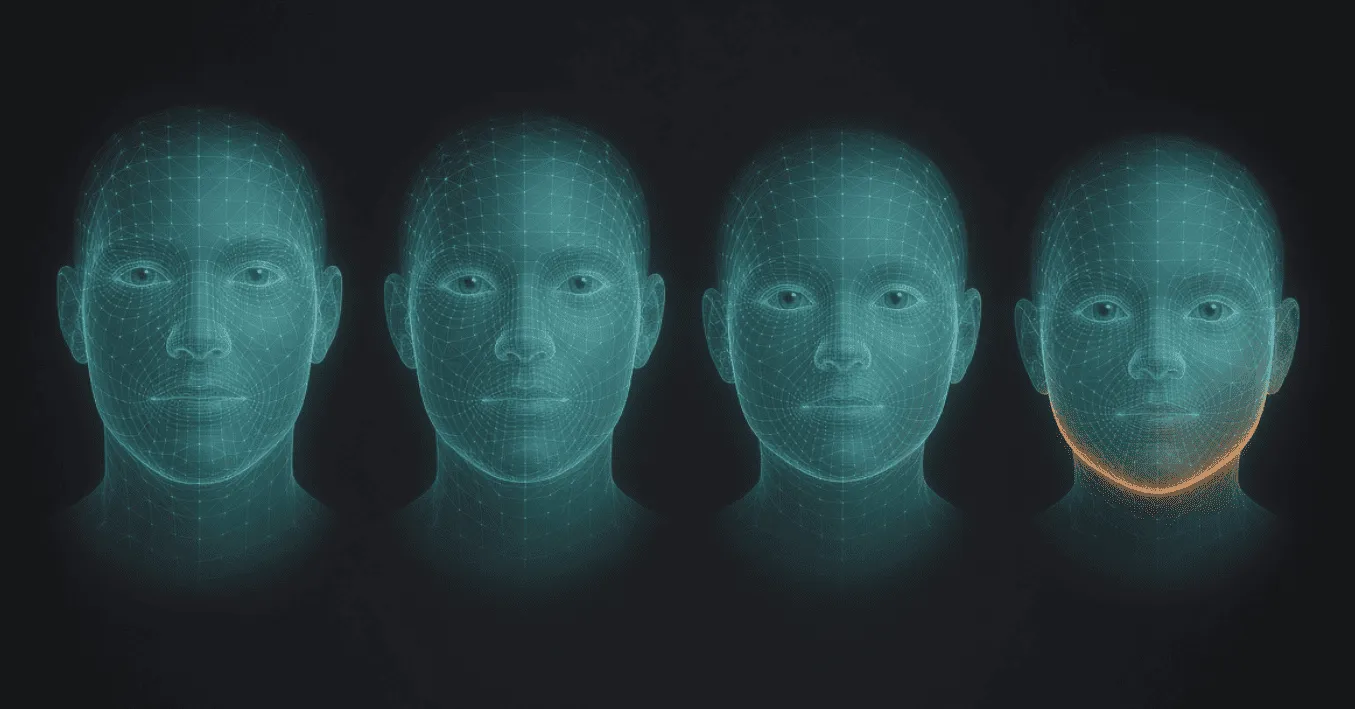
Visual effects is where AI filmmaking has gone from experimental to genuinely mainstream. Digital de-aging is the clearest example. For The Irishman (2019), Industrial Light & Magic built a markerless facial-capture system called FLUX, assisted by machine learning. The system let Robert De Niro, Al Pacino, and Joe Pesci perform without facial tracking markers or head-mounted cameras. The system adjusted their appearance. It didn’t touch their actual performance.
For Indiana Jones and the Dial of Destiny (2023), ILM took a more generative approach. According to ILM’s Rob Bredow, artists hand-tuned generative AI models trained on Harrison Ford’s past performances as the character. They then blended that output with a more traditional approach, because the generative models struggled with fine detail and control. Bredow said he considers the result among the finest de-aging work anyone has produced.
Director Robert Zemeckis took yet another route for Here (2024), working with the AI company Metaphysic to de-age Tom Hanks and Robin Wright in real time on set, with only a two-frame delay, rather than fixing it entirely in post-production.
On a smaller scale, VFX artist Evan Halleck has credited the AI tool Runway with streamlining much of his work on Everything Everywhere All at Once.
“We do need to use them thoughtfully, with the full permission of the talent.”
Rob Bredow, Industrial Light & Magic, on generative AI tools in VFXThree different films, three different technical approaches, one shared pattern: AI handles the heavy visual lift while a human performance sits underneath all of it. That distinction, technology serving a performance rather than replacing it, is exactly what current union contracts are built to protect.
Benefits and Limitations of AI Filmmaking
Like most production technology, AI filmmaking is genuinely useful in some places and genuinely risky in others. Here’s an honest scorecard.
The Future of AI in Cinema
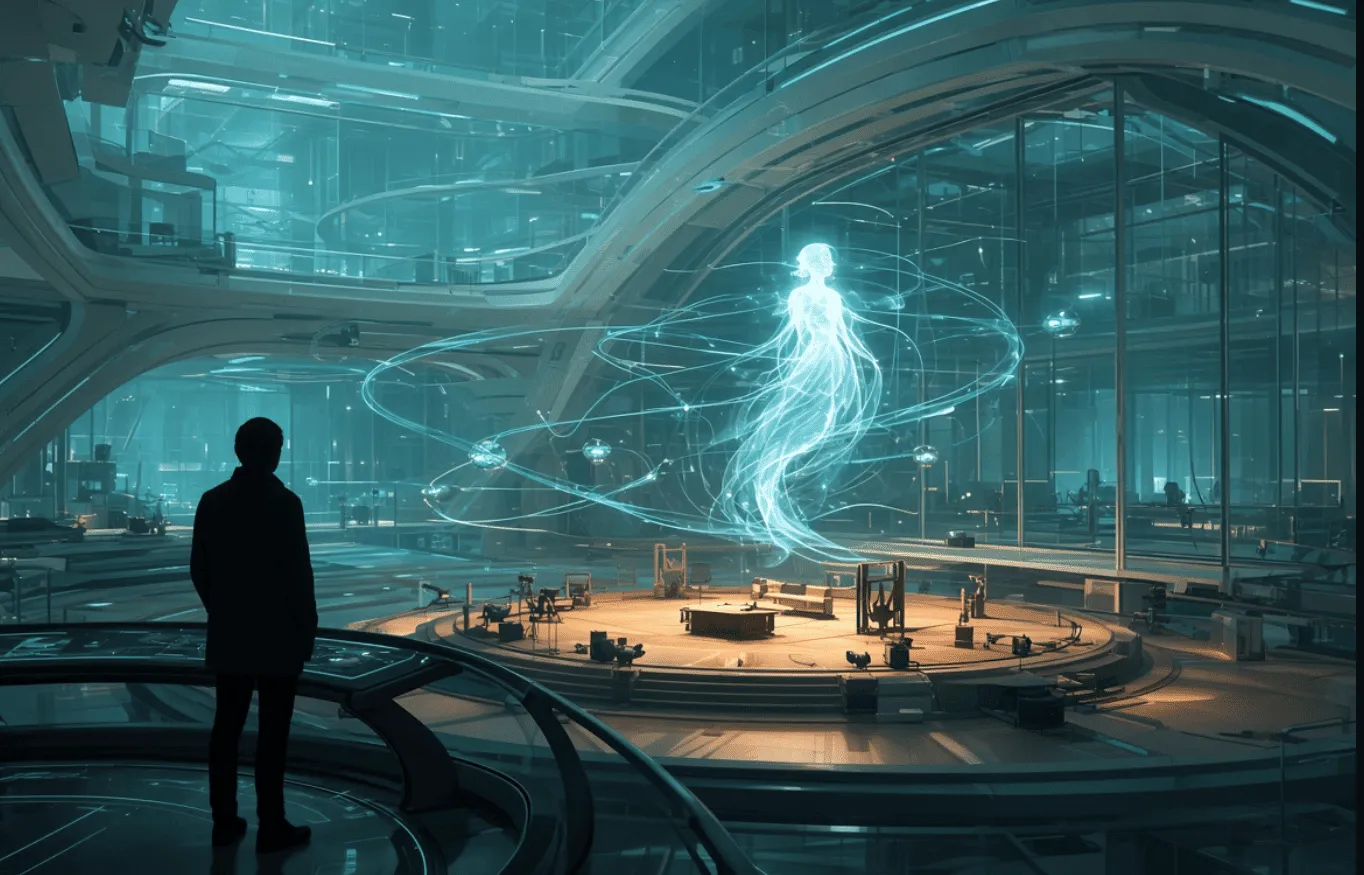
Where this goes next probably depends less on what the technology can do and more on what the industry decides to allow. According to Variety, SAG-AFTRA’s newly ratified four-year deal lets producers use AI performers only when they add significant value beyond a live actor or that actor’s digital avatar. The union also gets notice and a chance to bargain if studios start using synthetic actors. Some members argue the language doesn’t go far enough. Either way, the limit is a negotiated choice and not a technical one.
It’s worth separating that near-term reality from pure speculation. ECHO OF THE CLONE isn’t about filmmaking at all. It’s set in 2127 and centers on AI governance and human cloning. As a thought experiment, though, it’s fair to ask: if an AI as capable as the film’s GAIA existed, how much of the creative process might it eventually touch? The film doesn’t answer that question. It’s simply a useful prompt for thinking about where today’s much narrower AI filmmaking tools might, or might not, eventually lead.
For more on how the film’s own world was built, see Behind the Scenes of ECHO OF THE CLONE: The 2127 Universe. For the creative side of this debate, see our companion piece on AI-Assisted Filmmaking: AI and Human Creativity.
FAQ: AI Filmmaking
What is AI filmmaking?
AI filmmaking is the use of artificial intelligence tools anywhere in the movie-making process, from script analysis and storyboarding to visual effects, editing, and de-aging. It covers a wide range of techniques, most of which support human filmmakers rather than replace them.
How is AI actually used in movies today?
The clearest examples are in visual effects. Industrial Light & Magic used a markerless facial-capture system called FLUX, assisted by machine learning, to de-age Robert De Niro, Al Pacino, and Joe Pesci in The Irishman. For Indiana Jones and the Dial of Destiny, ILM artists hand-tuned generative AI models trained on Harrison Ford’s earlier performances to de-age him for key scenes.
Can AI replace film actors?
Not without the performer’s consent, at least under union contracts. SAG-AFTRA’s 2023 agreement, reached after a lengthy strike, requires written, informed consent and compensation before a studio can create or use a performer’s digital replica. A 2026 deal adds that AI performers are allowed only where they bring significant added value over a live actor or their digital avatar.
What are the main benefits of AI in filmmaking?
Less manual work and potential cost savings are the biggest ones. AI-assisted tools can cut down the painstaking hand-done parts of visual effects work. Flawless, a visual dubbing company, says its tool can cost up to 50% less than reshooting scenes. That can free up time for the creative decisions that still require a person.
What are the limitations of AI filmmaking?
Quality and consent are the two biggest issues. ILM’s own 2025 generative AI test footage for a Star Wars short received widespread criticism for both its use of AI and its quality. That shows the technology isn’t a drop-in replacement for skilled artists. On the consent side, using a performer’s likeness without permission raises both legal and ethical problems that current union agreements are specifically designed to prevent.
Does ECHO OF THE CLONE depict AI filmmaking?
Not directly. The film is about AI governance and human cloning, not filmmaking itself. Its 2127 setting is used here only as a thought experiment about how far creative automation might eventually go, not as a depiction of the film industry.
See the World Behind the Technology
Curious how ECHO OF THE CLONE’s own world was built? Go behind the scenes of its 2127 universe.
About the Film Cinematic Universe Meet GAIAKeep Reading
AI-Assisted Filmmaking: AI and Human Creativity
Where AI tools help, and why human creativity still matters.
Behind the Scenes of ECHO OF THE CLONE: The 2127 Universe
The worldbuilding and creative vision behind the film.
AI Ethics: 5 Key Questions About Our AI Future
Responsibility, autonomy, and where the hard calls sit.
Sources and further reading
- Decrypt, ILM Makes ‘Star Wars: Field Guide’ Short Film Using Generative AI, 2025.
- Definition Magazine, Digital De-Aging, 2025.
- Brown Film Magazine, Digital De-Aging: AI, VFX, and the Uncanny Valley.
- Variety, SAG-AFTRA Members Approve Four-Year Deal With AI Terms and Pension Merger, 2026.
- SAG-AFTRA, Artificial Intelligence resources.
- New Atlas, First AI visually dubbed feature film hits US theaters.
- The Next Web, Flawless AI’s True Sync tech is a revolution for film dubbing.
- UNC College of Arts and Sciences, Taking AI to the movies, 2026.
- Wikipedia, Industrial Light & Magic (Mandalorian virtual production; reception of the 2025 test footage).
- Next Horizon, AI Actors and Digital Replicas (FLUX system).
- Atland Ventures, Beyond the Frame: How AI is Transforming the Film Industry.
- Rodrigues Law, 9 Essential AI Clauses for Entertainment Contracts (WGA 2023 disclosure rules).
- arXiv, Generative AI for Film Creation: A Survey of Recent Advances, 2025.
Film details for third-party titles come from publicly available sources. ECHO OF THE CLONE details come from official film materials. This article is general information, not legal advice on union agreements or likeness rights.