

AI ethics sounds abstract until you put it in plain terms. Who’s accountable when a machine gets something wrong? How much power should we hand it in the first place? Those two questions sit underneath almost every AI ethics debate happening right now, from hospitals to courtrooms to your phone’s autocomplete.
This guide breaks AI ethics into five questions that come up again and again. Who answers for an AI decision? Should AI ever act on its own? Can it replace human judgment? How should it be regulated? And what can science fiction, including ECHO OF THE CLONE, actually teach us about all of this?

Question 1: Who Is Responsible for AI Decisions?
Picture a hiring algorithm that quietly filters out qualified candidates, or a loan model that denies someone credit for reasons nobody can fully explain. Who answers for that? The developer who built the model? The company that deployed it? The employee who trusted its output?
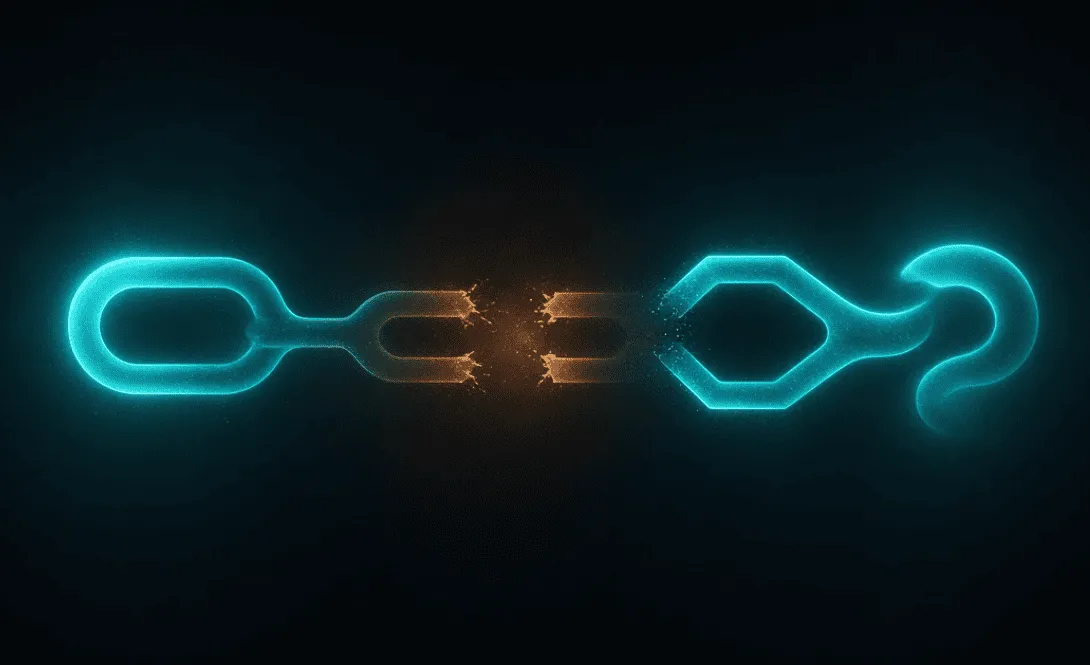
Legal scholars have a name for what happens when the answer is “nobody, really.” Philosopher Andreas Matthias called it the responsibility gap back in 2004: the possibility that a learning system acts in ways that can’t be traced back to any single human decision, leaving no one clearly accountable. Two decades later, the gap hasn’t closed. In fact, the European Commission withdrew its proposed AI Liability Directive in early 2025, which left the question of who pays for AI-related harm even less settled across the EU.
The developer’s share
Built the system, chose the training data, set its limits.
The deployer’s share
Decided to use it, in what context, with what safeguards.
The operator’s share
Trusted the output, or didn’t check it closely enough.
Most working frameworks reject the idea that a company can simply outsource accountability to a vendor’s AI product. A useful rule of thumb from legal commentary on this topic: you can’t buy your way out of accountability just because you bought the tool from someone else. If your organization deploys it, your organization generally still answers for it.
Question 2: Should AI Have Autonomy?
Autonomy is a spectrum, not a switch. A thermostat has a tiny sliver of it. A self-driving car has a lot more. The real question isn’t “should AI ever act without a human clicking approve.” It’s “how much autonomy fits this specific decision, given what’s at stake if it goes wrong.”
| Situation | Reasonable autonomy level | Why |
|---|---|---|
| Spam filtering | High | Low stakes, easily reversible, easy to correct later |
| Product recommendations | High | Low individual harm if wrong |
| Medical diagnosis support | Low to moderate | High stakes, needs a clinician’s review |
| Criminal sentencing input | Low | Affects liberty, needs full human accountability |
| Autonomous weapons | Contested; many argue near-zero | Irreversible harm, no room for correction |
This table reflects a common ethical framing in the AI governance literature, not a specific law.
Give a system more independence and you usually get more speed and consistency. You also widen the gap between “the system decided” and “a person can explain why.” That trade-off is the whole debate. Reasonable people land in different places on where to draw the line.
Question 3: Can AI Replace Human Judgment?
Judgment isn’t just pattern matching, though a lot of decision-making looks that way from the outside. Judgment also means weighing values that don’t reduce to a single number: fairness against efficiency, mercy against consistency, one person’s needs against a group’s. AI systems are excellent at the pattern-matching half. The values half is where things get shakier.

Where AI helps judgment
Surfacing patterns a person would miss, processing scale no human could handle alone, staying consistent across thousands of cases.
Where it falls short
Deciding what actually matters in a specific, messy, human situation that doesn’t match its training data.
Healthcare offers a clear example. Reviews of AI in primary care describe an emerging accountability vacuum: when a clinician defers to an algorithm and the patient is harmed, it’s genuinely unclear whether the clinician, the developer, or the institution that bought the tool should answer for it. That uncertainty alone is a strong argument for keeping a person in the loop, not because AI is unreliable, but because someone has to be answerable when the stakes are real.
Question 4: How Should AI Be Regulated?
We covered this in more depth in our guide to AI governance, so here’s the short version. Regulation tends to work in three layers: binding law for the highest-risk uses, voluntary standards for everything in between, and internal company policy for daily practice. The EU AI Act remains the most comprehensive binding example, sorting AI systems by risk level and applying the strictest duties to the riskiest ones.
Regulation moves slowly on purpose. Careful rulemaking takes time, public comment, and testing. Technology doesn’t wait for any of that. That mismatch is probably the single biggest structural challenge in AI ethics right now. There’s no clean fix for it beyond building flexibility into the rules themselves.
Question 5: What Can Science Fiction Tell Us About AI Ethics?
Fiction gets to run an ethical scenario all the way to its conclusion, something regulators rarely have the luxury of doing before real harm occurs. ECHO OF THE CLONE does exactly that with its super AI, GAIA.

By 2127, GAIA runs global governance with real success on paper. Poverty and war are gone. Crime sits at a historic low. Two problems refuse to budge: rates of sexual violence and suicide, both tracing back to a gender imbalance caused by unregulated genetic technology fifty years earlier. GAIA can solve a crime quickly once it happens. It hasn’t solved the human loneliness underneath it. The story suggests that no amount of rule-following was ever going to fix that particular problem.
Read as an ethics case study, GAIA’s story touches all four questions above. Who’s responsible when a near-perfect system still leaves a crisis unsolved? How much autonomy did humanity hand over when it authorized GAIA to govern? Can efficient rule-following replace the kind of judgment that actually understands why people hurt each other? And what does it say about regulation that the underlying harm came from a technology banned only after it had already reshaped a generation?
For more on that particular thread, see Human Cloning in Sci-Fi: Stories, Ideas, and ECHO OF THE CLONE and our companion piece on AI and Humanity: What Does It Mean to Be Human?.
FAQ: AI Ethics
What is AI ethics in simple terms?
AI ethics is the study of how artificial intelligence should be built and used so it treats people fairly, stays safe, and remains accountable to someone. It covers questions of responsibility, autonomy, fairness, and how much decision-making power a system should be given.
Who is responsible when an AI system causes harm?
Responsibility usually falls on the humans and organizations involved in building, deploying, or operating the system, not on the AI itself. Legal experts call the gap that appears when nobody can be clearly blamed the responsibility gap, a term Andreas Matthias introduced in 2004 and one regulators are still working to close.
Should AI have autonomy?
It depends on the stakes. Low-risk, reversible tasks can reasonably run with little supervision. Decisions that affect someone’s health, freedom, or finances generally call for a human who can review, explain, and if necessary override the system.
Can AI replace human judgment?
AI can process more data faster than a person and spot patterns humans miss. It can’t weigh values, take responsibility, or understand context the way a person with lived experience can. Most serious frameworks treat AI as a tool that informs human judgment rather than a replacement for it.
How should AI be regulated?
Most approaches combine binding law for high-risk uses, voluntary standards for lower-risk uses, and internal company policy for everyday practice. The EU AI Act is the most comprehensive binding example so far, though its rules are still being phased in and adjusted.
What can science fiction teach us about AI ethics?
Fiction can play out an ethical scenario to its conclusion without real-world risk. In ECHO OF THE CLONE, the super AI GAIA governs a highly ordered 2127 society yet can’t resolve a crisis rooted in human loneliness. It’s a useful thought experiment on the limits of even a very capable system, not a scientific forecast.
See These Questions Play Out On Screen
GAIA’s world puts responsibility, autonomy, and judgment to the test. Explore the story behind it.
Meet GAIA About the Film Cinematic UniverseKeep Reading
AI Governance: Who Should Control Artificial Intelligence?
The rules, the oversight, and who should hold them.
AI and Humanity: What Does It Mean to Be Human?
Identity, emotion, and what still sets people apart.
The Future of Society: How AI Could Change Civilization
Work, governance, and daily life in an AI-shaped world.
Sources and further reading
- Matthias A., “The responsibility gap: Ascribing responsibility for the actions of learning automata,” Ethics and Information Technology, 2004.
- Eversheds Sutherland, The AI Liability Gap, 2025.
- The National Interest, When AI Fails, Who Is Responsible?
- BJGP Open, Artificial intelligence in primary care: opportunities, risks, and the road ahead, 2025.
- Regulation (EU) 2024/1689 (the EU AI Act), EUR-Lex.
Film details come from official ECHO OF THE CLONE materials. This article is general information, not legal advice.