
AI-assisted filmmaking uses artificial intelligence tools within a production shaped by human creative decisions. A tool may suggest an image, alter part of a frame or extend a clip. Filmmakers still need to decide what the scene means, how it fits the story and whether the result belongs in the finished film.
That distinction matters when a convincing image is only a few clicks away. A beautiful cityscape can establish a world, but it cannot decide why a character feels trapped there. The useful question is where AI helps a filmmaker carry an idea through to the screen.
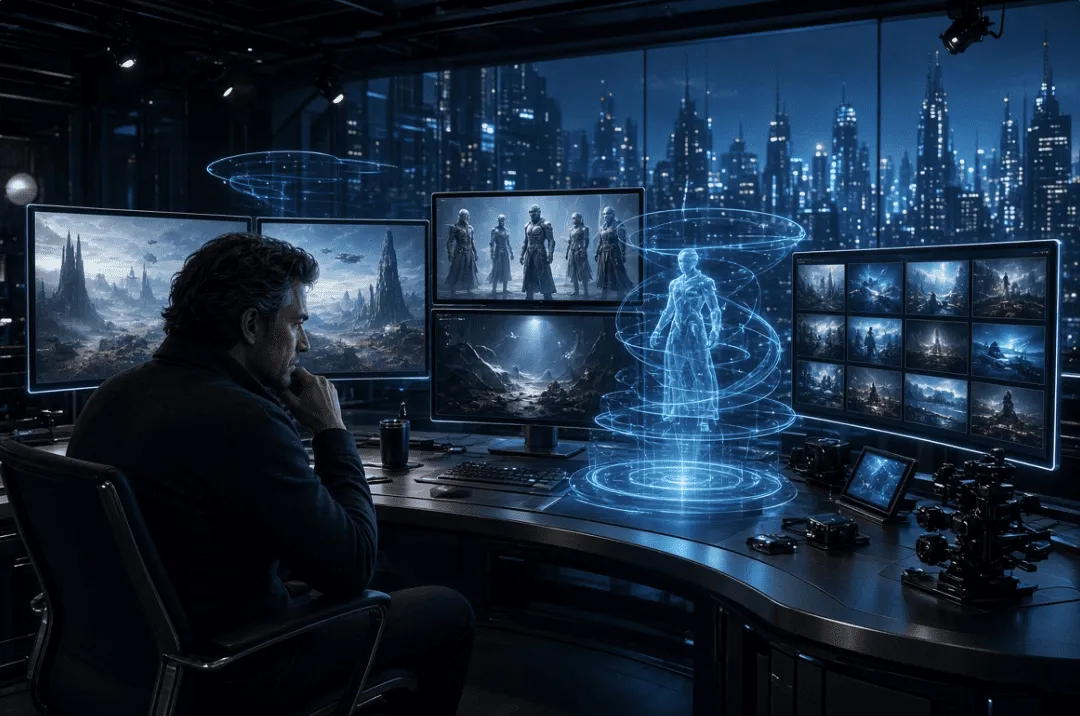
AI-assisted filmmaking combines AI tools with human writing, design, editing and review. Its value depends on the task: exploring visual options or adjusting a short edit can be useful, while story coherence, factual accuracy, continuity and rights still require careful decisions. Using AI does not automatically make an entire film AI-authored.
What Is AI-Assisted Filmmaking?
There is no single production method behind the term. An editor using an AI feature for one shot and a team generating visual concepts throughout pre-production may both describe their work as AI-assisted. The label becomes useful when it identifies the actual task and the people responsible for the result.
It also helps to separate assistance from generation. A tool that helps organize material plays a different role from one that generates new imagery. Both can support production, but they raise different questions about reliability, creative control and authorship.
Creative intent
The team defines the story, emotional purpose and visual direction before judging outputs.
A specific task
The tool addresses a bounded need, such as exploring a background or extending an edit.
Human review
Someone checks the result against the scene, adjacent shots and the project’s rights requirements.
AI, 3D production and virtual production are not interchangeable terms. A digitally modeled environment does not become AI-generated simply because it looks futuristic. When describing a film’s process, name the technique only when the production has confirmed it.
For a broader overview of applications across the industry, read AI Filmmaking: How AI Is Changing Movie Production. Here, the focus is how human choices guide the work.
AI in Screenwriting and Pre-production
Start with the dramatic problem
A useful AI filmmaking process starts with a brief. What does the character want? What changes during the scene? What should the audience understand now, and what should remain uncertain? These questions provide a way to evaluate an output beyond whether it sounds polished.
For a hypothetical scene, imagine a character entering a cloning facility to look for someone they love. The writer first decides whether the moment should convey hope, suspicion or grief. Visual ideas and suggested scene variations can then be tested against that intention. A spectacular laboratory may be the wrong choice if the scene needs quiet intimacy.
AI creative tools can be used to propose alternatives or organize a working outline. Those are possible uses, not a guarantee of good writing. A writer should examine each suggestion for character motivation, repeated exposition and contradictions with earlier scenes. Accepting a fluent paragraph without that review can make the script less coherent.
Check research outside the model
If a script depends on scientific, historical or legal facts, verify them against the underlying sources. The NIST Generative Artificial Intelligence Profile identifies confabulation as a risk: a system may produce confident but false material. A plausible account of cloning or copyright is not sufficient evidence for a factual claim.
The same principle applies to production planning. A generated breakdown can serve as a draft, but a producer must check the actual script, locations, props and dependencies. Before uploading unpublished scripts or personal information, review the service’s data-handling terms and the permissions attached to the material.
AI in Visual Design and Post-production
Explore images, then build a consistent visual language
Concept work benefits from comparing alternatives. A designer might test how a restrained palette changes the mood of a room or whether a background draws attention away from a character. The important next step is choosing a direction and carrying it consistently across the sequence.
Adobe’s current Photoshop Generative Fill documentation describes altering selected areas of an image non-destructively, with or without a text prompt. This provides a concrete example of AI-assisted image work. It does not establish that a still-image edit will remain consistent across moving footage.
Use editing features for a defined need
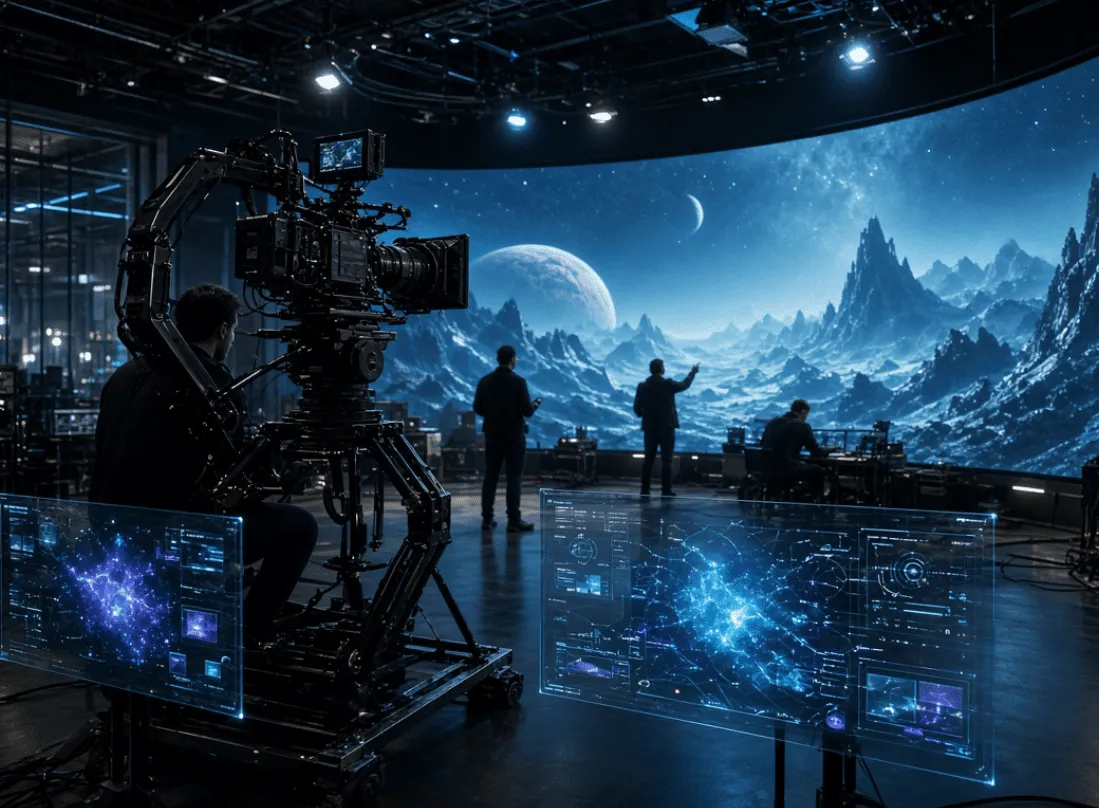
Adobe’s Premiere Generative Extend documentation describes adding frames at the beginning or end of a clip and extending audio. An editor might use that feature to test a transition or give a shot slightly more room in an edit. The feature’s documented purpose is narrower than generating an entire scene.
Review the extension in context. Does a face change? Does a moving object continue naturally? Does the sound join cleanly? A result that looks acceptable on its own may fail when played between the surrounding shots.
| Production task | Possible assistance | Human decision |
|---|---|---|
| Scene development | Suggest alternative beats or organize notes. | Choose motivation, conflict and the change the scene must deliver. |
| Visual exploration | Generate or alter concept imagery. | Approve the design and maintain continuity across shots. |
| Edit adjustment | Extend a clip using a supported feature. | Check timing, motion, sound and the meaning of the cut. |
| Delivery review | Support parts of the checking process. | Inspect the finished sequence and confirm required permissions. |
For this workflow, keep original assets, approved versions and the edit history. That makes it easier to reverse a weak change, explain how a shot developed and separate a useful experiment from material approved for release.
Why Human Creativity Still Matters
A film connects decisions across time. The framing of one scene changes how a later scene feels. A pause can alter the meaning of a line. An image may be attractive yet reveal information too early. These are reasons to assess AI outputs as parts of a film rather than as isolated achievements.
Human creativity includes refusing an option. A director might reject the most elaborate background because it distracts from a performance. An editor might choose a shorter shot because the scene needs discomfort. More available outputs make a clear intention more useful.
What ECHO OF THE CLONE’s studio has disclosed
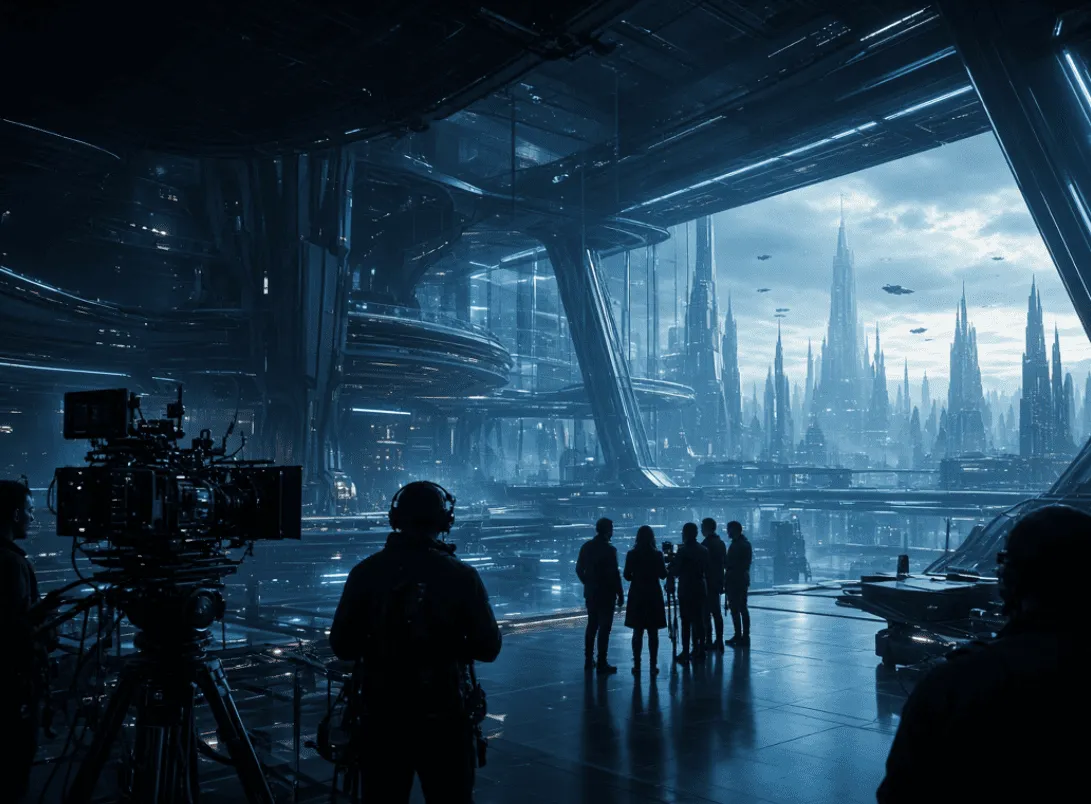
According to LUMERCATCH’s official studio introduction, the screenplay for ECHO OF THE CLONE was written entirely by human creators. The studio says AI and 3D digital technologies were used throughout production, including character development, virtual environments and visual creation.
That disclosure supports a specific account of human writing with technological assistance. It does not identify the software used for individual shots or provide measured savings. The tool examples in this article illustrate available techniques; they are not claims about this film’s production pipeline.
Human authorship and US copyright
The US Copyright Office’s January 2025 report on copyrightability concludes that using AI to assist human creativity does not itself prevent copyright protection. It distinguishes protectable human expression from purely AI-generated material.
The report also explains that, with the generally available technology it considered, prompts alone do not provide sufficient control over the expressive elements of an output. Human-authored material perceptible in an output, creative arrangements and creative modifications may qualify for protection, with the analysis made case by case.
These findings concern US copyright. They do not settle every country’s law or every production agreement. A tool’s permission for commercial use is also a separate question from copyright protection and from permission to use a person’s likeness or third-party material.
The Future of AI-Assisted Film Production
The official tool documentation shows AI features working inside familiar image and editing applications. That makes task-level decisions increasingly relevant: which operation needs assistance, what result is acceptable and who approves it?
For independent teams, test a tool on a representative shot before building a production around it. Count revision and review time as well as generation time. Include subscription costs, cleanup, consistency work and any rights clearance. A fast first output is not enough to establish a cheaper finished sequence.
A practical workflow can follow five steps:
- Define the intention. State the scene’s emotional and narrative purpose.
- Choose the task. Assign AI a specific operation with a visible result.
- Check the inputs. Confirm references, permissions and data-handling requirements.
- Review in context. Test the output within the complete sequence.
- Document approval. Preserve originals, revisions and the decision to use the final version.
This is a proposed production method, not a prediction that one technology will take over cinema. It gives filmmakers a way to assess new features while keeping the story and the people making it at the center of the work.
FAQ: AI-Assisted Filmmaking
What is AI-assisted filmmaking?
AI-assisted filmmaking uses artificial intelligence tools for specific tasks within a film production. Human creators guide the story, select and revise outputs, and approve the finished work.
Is AI-assisted filmmaking the same as an entirely AI-generated film?
No. A production can use AI for a limited task while retaining human-written scripts, performances and editing. The term alone does not tell you how much material was generated; the production’s specific disclosures matter.
Can AI help with screenwriting?
AI can be used to suggest alternatives or organize an outline. Writers still need to check character motivation, structure, originality and factual claims. LUMERCATCH states that ECHO OF THE CLONE’s screenplay was written entirely by human creators.
Does AI replace human creativity in filmmaking?
AI can generate options and assist with production tasks. A coherent film still requires decisions about meaning, performance, continuity and editing. Whether a particular workflow preserves meaningful human control depends on how the tools are used.
Are AI filmmaking and 3D production the same thing?
No. A 3D environment or a virtual production setup is not automatically AI-generated. These techniques can be combined, but a production should describe their actual roles separately.
Can an AI-assisted film receive US copyright protection?
Human-authored expression can receive protection even when a work includes AI-generated material. The US Copyright Office’s 2025 report says purely AI-generated material is not protected and that prompts alone are generally insufficient under the technology it examined. Human contributions are assessed case by case.
Explore the Story Behind the Technology
ECHO OF THE CLONE explores ethical and humanistic questions through science fiction. Discover the film and the studio’s approach to human-led, AI-assisted production.
Explore the Film Meet LUMERCATCHSources and Further Reading
Sources checked on October 8, 2026. Tool capabilities can change; the linked documentation provides the current product details.
- LUMERCATCH: About the studio — the studio’s own disclosure of human screenwriting and AI/3D production assistance.
- Adobe: Generative Fill in Photoshop — official documentation for selected-area image changes.
- Adobe: Generative Extend in Premiere — official documentation for extending clips.
- US Copyright Office: Copyright and Artificial Intelligence, Part 2 — January 2025 report on human authorship and copyrightability.
- NIST AI 600-1: Generative Artificial Intelligence Profile — July 2024 guidance on risks including confabulation, privacy and intellectual property.