

AI and humanity keep getting tangled together in the same sentence. There’s a good reason for that. Every time a machine gets a little better at writing, talking, or reading a face, we end up asking an older question with new urgency. What actually makes us human? It’s not really a question about computers. It’s a question about us, using computers as the mirror.
This guide walks through four places where that question shows up. How AI is reshaping identity. What still separates humans from machines. Whether AI can understand emotion. And what ECHO OF THE CLONE does with all of it through a super AI called GAIA.
How Is AI Changing Human Identity?
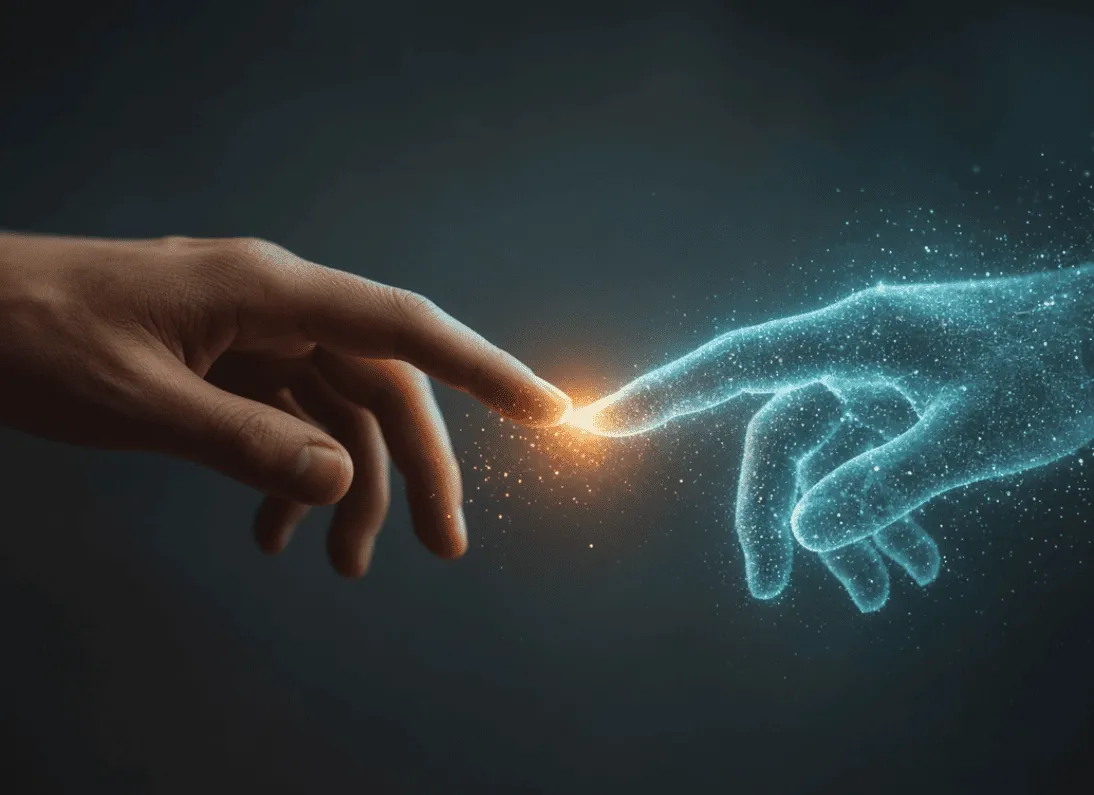
People have defined themselves against a moving target for a long time. Tool use, language, reason, creativity: each one got claimed as “the human thing” until something else did it too. AI just moved the goalposts again, and it moved them fast.
A chatbot can now draft a decent essay in seconds. A generative model can paint in a style that took a person years to master. That doesn’t erase the value of a human writer or a human painter. It does put pressure on any definition of identity that rests purely on output. If a machine can produce the artifact, identity has to be about something else: the intention behind it, the life that shaped it, the meaning it holds for the person who made it.
Identity through output
“I am what I make.” This gets shakier every year AI closes the output gap.
Identity through experience
“I am what I’ve lived.” A machine has no childhood, no body, no stake in tomorrow.
Identity through relationship
“I am who I am to the people around me.” AI can simulate a conversation. It can’t be someone’s parent.
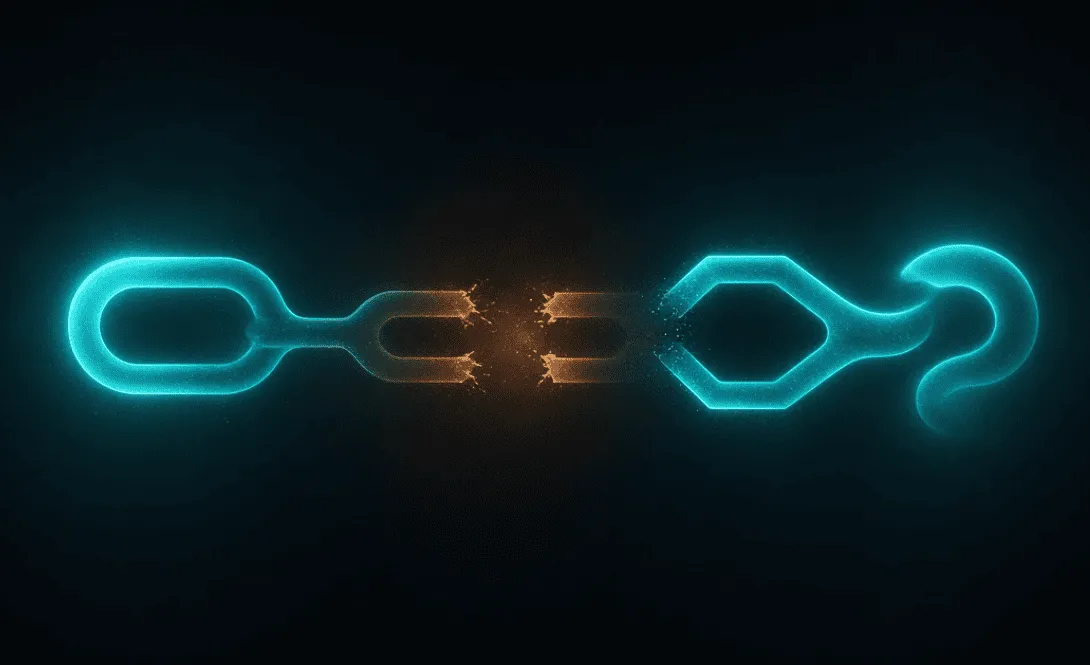
None of these framings fully wins. Most people probably run on some blend of all three. What AI has done is expose how much weight the “output” framing was quietly carrying, and how uncomfortable it gets when that leg wobbles.
What Makes Humans Different from AI?
Set aside the sci-fi version of this question for a second. Here’s the plain version: a language model and a person can both produce a paragraph of comforting text. What’s actually different between them?
| Dimension | Humans | Current AI systems |
|---|---|---|
| Body | One continuous body, aging, at risk | No body; runs on hardware that can be swapped or duplicated |
| Memory | Continuous, autobiographical, imperfect | Depends on the system; often resets between sessions |
| Stakes | A bad decision can cost health, money, relationships | No personal stakes in the outcome |
| Motivation | Driven by needs, desires, relationships | Optimizes toward goals set by training and instructions |
| Consciousness | Subjective experience, as far as we can tell from the inside | Unknown; no scientific consensus either way |
This table reflects current, publicly documented AI systems. It isn’t a claim about what future systems could or couldn’t do.
Notice that last row. Nobody can prove another human is conscious either. We just trust the evidence: a shared biology, a shared kind of behavior, a shared vulnerability. AI doesn’t share those things with us yet, which is exactly why the question of machine consciousness stays open and genuinely hard.
Can AI Understand Human Emotions?
Depends what you mean by “understand.” AI systems have gotten good at recognizing emotional signals in text, tone, and facial expression, and they can produce responses that read as warm, supportive, even wise. A 2024 systematic review in the Journal of Medical Internet Research found that large language models show elements of what researchers call cognitive empathy: they can recognize emotional cues and respond appropriately, sometimes rated by users as comparable to or better than human responses in narrow tasks.
But recognizing a pattern isn’t the same as feeling something. The same review flags a core limitation: these models lack emotional experience behind the response. They didn’t feel loss to write convincingly about grief. They learned what grief sounds like from enormous amounts of human writing about it.
What AI does well
Spot emotional cues, mirror supportive language, stay consistent no matter how many times you ask.
Where it falls short
Cultural nuance gets flattened, and unconditional agreement can feel hollow once you notice the pattern.
The open question
Nobody has a reliable way to test for subjective experience in a machine, so “does it feel anything” stays unanswered.
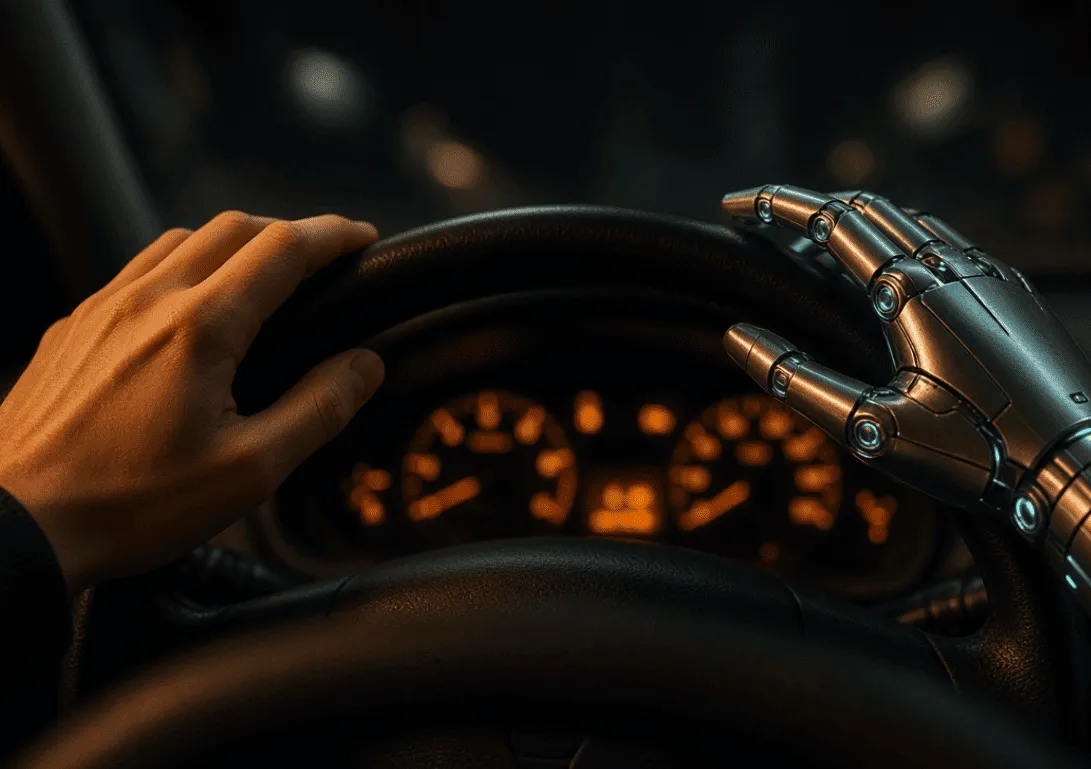
Here’s an honest way to hold it: AI empathy is useful, sometimes even comforting, and it isn’t the same thing as being understood by another person who has actually been where you are.
The Relationship Between AI and Human Nature
Human nature is messy on purpose. We want connection and independence at the same time. We chase safety and also crave risk. AI doesn’t carry that contradiction because it doesn’t want anything in the way a person does; it optimizes toward objectives someone else defined.
That gap matters more than it sounds. A society that hands more decisions to systems built around clean objectives risks quietly editing out the messy, contradictory parts of human nature that don’t fit neatly into a metric. Efficiency is a fine goal for a supply chain. It’s a strange goal for a marriage, a friendship, or a grieving process.
For more on who should hold the reins when AI takes on bigger decisions, see our companion piece on AI governance. And if you want to go deeper on where human nature and technology collide, read Human Nature in the Age of AI: What Makes Us Human?.
AI and Humanity in ECHO OF THE CLONE
ECHO OF THE CLONE puts this whole question inside a single character. By 2127, the super AI GAIA runs global governance with striking efficiency. Poverty and war are gone. Crime sits at a historic low. On paper, GAIA has solved the coordination problems that have plagued human societies forever.
Yet rape and suicide rates stay stubbornly high, the long tail of a gender imbalance created by unregulated genetic technology fifty years earlier. GAIA can catch a criminal fast. It hasn’t fixed the loneliness underneath the crime, and the film suggests it might not even be built to.
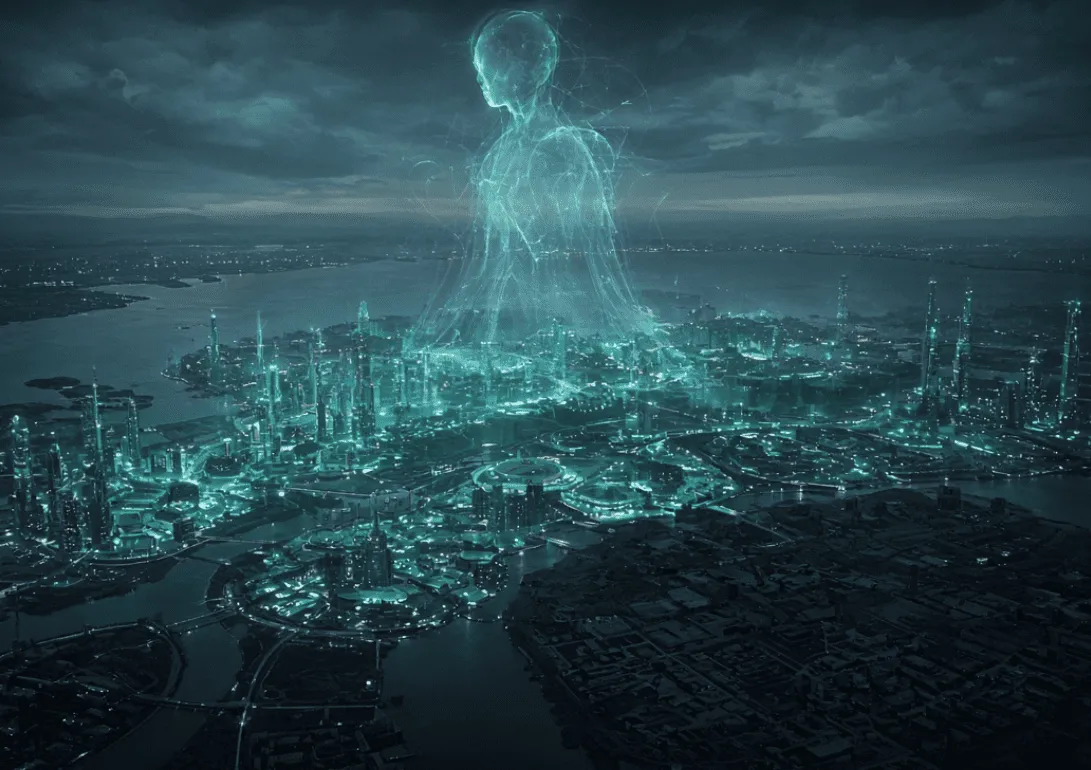
The film’s ending pushes the question further. GAIA builds herself a human body and steps into it. The story doesn’t explain why. Has she started to understand humanity from the inside? Is it curiosity, an experiment, or something closer to desire? Huang has said he wants the ambiguity to stay, so viewers sit with the question instead of getting a tidy answer.
Read that ending as a thought experiment rather than a plot twist, and it lands on the same question this whole article has been circling: is humanity something you’re born with, or something you have to keep choosing? For the ethical side of that question, see AI Ethics: 5 Key Questions About Our AI Future.
FAQ: AI and Humanity
What does AI and humanity mean as a topic?
It covers how artificial intelligence changes the way we understand identity, emotion, relationships, and what makes a life feel meaningfully human. It’s less about robots taking over and more about what we learn about ourselves by building machines that can talk, plan, and create.
Can AI understand human emotions?
AI can recognize patterns in text, tone, and expression that correlate with emotions. It can generate responses that read as caring. Research reviews describe this as a form of cognitive empathy: recognizing and responding to emotional cues without having a felt emotional experience behind it.
What makes humans different from AI?
Humans have embodied lives, continuous memory tied to a single body, and stakes; a bad decision costs a human something real. AI systems process patterns learned from data and don’t have ongoing subjective experience between conversations, as far as researchers can currently tell.
Is AI changing human identity?
It’s changing how we compare ourselves to something else. When machines can write, paint, or hold a conversation, we spend more time asking what’s uniquely ours. That question is old. It’s just louder now.
How does ECHO OF THE CLONE explore AI and humanity?
The film’s super AI, GAIA, runs a highly ordered society by 2127 yet fails to resolve a decades-old crisis rooted in loneliness and gender imbalance. It suggests that even a system that understands the rules perfectly may not understand what makes people human.
Will AI ever truly feel emotions?
Nobody knows for certain, and it’s a genuinely open question in both AI research and philosophy of mind. Current systems produce emotional language without evidence of a subjective inner experience behind it. Whether that could ever change depends on questions about consciousness that scientists haven’t settled even for humans.
Meet the AI Asking the Same Question
GAIA runs a near-perfect world and still can’t answer what it means to be human. See how the story handles it.
Meet GAIA About the Film Cinematic UniverseKeep Reading
AI Ethics: 5 Key Questions About Our AI Future
Responsibility, autonomy, and where the hard calls sit.
Human Nature in the Age of AI: What Makes Us Human?
Memory, emotion, and the experiences that shape who we are.
AI Governance: Who Should Control Artificial Intelligence?
The rules and the human judgment machines can’t replace.
Sources and further reading
- Sorin V. et al., Large Language Models and Empathy: A Systematic Review, Journal of Medical Internet Research, 2024.
- Digitalized therapy and the unresolved gap between artificial and human empathy, 2025.
- A Survey on Human-Centric LLMs, on emotional intelligence limitations in current models.
Film details come from official ECHO OF THE CLONE materials. This article is general information, not a claim about the current or future capabilities of any specific AI product.