
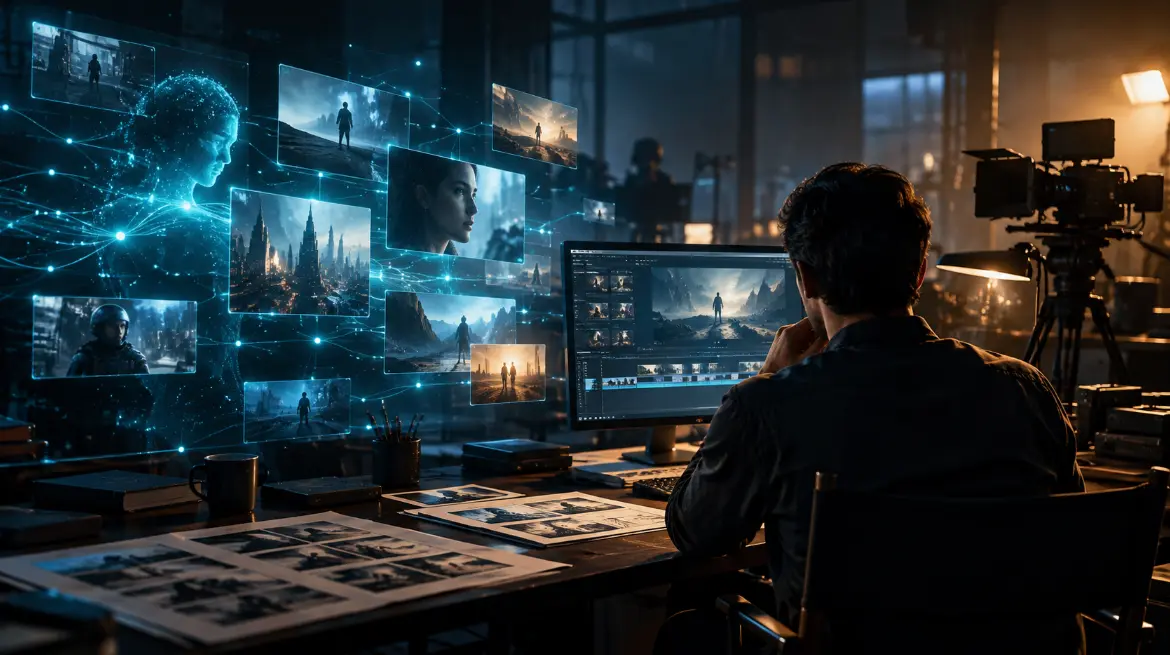
AI-assisted filmmaking can make visual experimentation faster, but speed does not create a story by itself. In the workflow we advocate, a filmmaker decides what a scene means, which performance matters, what the audience should notice and when an impressive image does not serve the film.
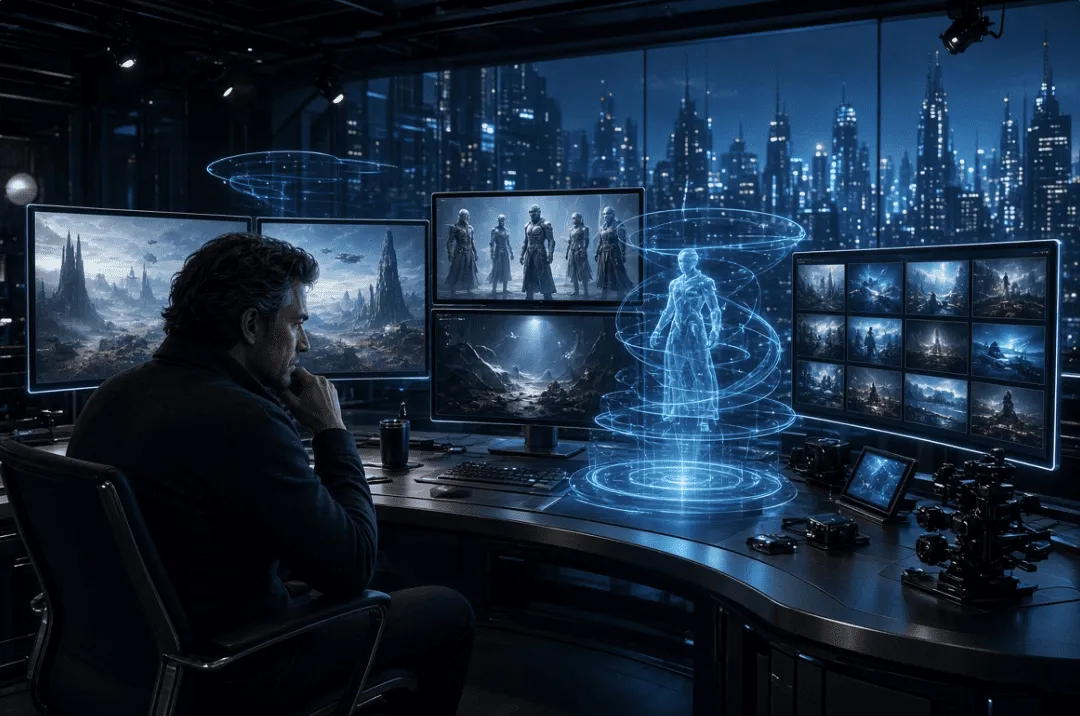
At LUMERCATCH, we see AI as part of a human-led creative process. The screenplay for ECHO OF THE CLONE was written entirely by human creators. The studio describes using AI and 3D digital technologies in character development, virtual environments and visual creation.
The Central Question Is Control
Discussions about AI in cinema often begin with the wrong measurement. They ask how quickly a system can produce an image, a scene variation or a line of dialogue. Production teams also need to ask who controls the expressive result.
Who Chooses the Meaning?
Control is visible in the choices surrounding an output. A filmmaker selects the dramatic purpose of a scene, sets constraints, compares alternatives, rejects weak results and revises the material until it works with the rest of the film.
A US Copyright Perspective
The U.S. Copyright Office’s report on AI and copyrightability explains that AI assistance does not by itself prevent copyright protection, while purely AI-generated material is not protected and human contributions are considered case by case. These conclusions address US copyright; they do not settle other countries’ laws, likeness permissions or commercial licence terms.
Why Faster Production Still Needs Human Judgment
AI creative tools can help teams explore color, composition, environments or timing. They can also produce material that looks confident while containing factual errors, visual inconsistencies or details that undermine the scene.
Verify Claims Before Using Them
The NIST Generative Artificial Intelligence Profile identifies confabulation as a risk because a system can present false or inconsistent content with confidence. In filmmaking, this may appear as a scientific claim that cannot be supported or a visual continuity error that becomes obvious when shots are edited together.
Give Each Task a Named Reviewer
| Stage | Possible AI assistance | Human responsibility |
|---|---|---|
| Story development | Organize notes or suggest alternatives. | Define character motivation, conflict and meaning. |
| Visual design | Explore environments or compositions. | Choose a visual language and maintain continuity. |
| Production planning | Draft breakdowns or identify repetitive tasks. | Verify the script, resources, schedule and permissions. |
| Editing and finishing | Support selected adjustments. | Judge timing, performance, sound, rights and quality. |
Human Authorship Is More Than Writing a Prompt
A prompt can express an intention. It does not necessarily determine the final expressive details. Filmmaking contains many layers of authorship: writing, directing, production design, cinematography, editing, sound and the creative arrangement of the finished work.
Preserve the Work Behind the Output
For a film team, documenting those contributions is practical. Keep screenplay versions, approved references, source assets, major revisions and final approvals. This record helps explain how a sequence developed and identify which decisions were made by people.
Our View from ECHO OF THE CLONE
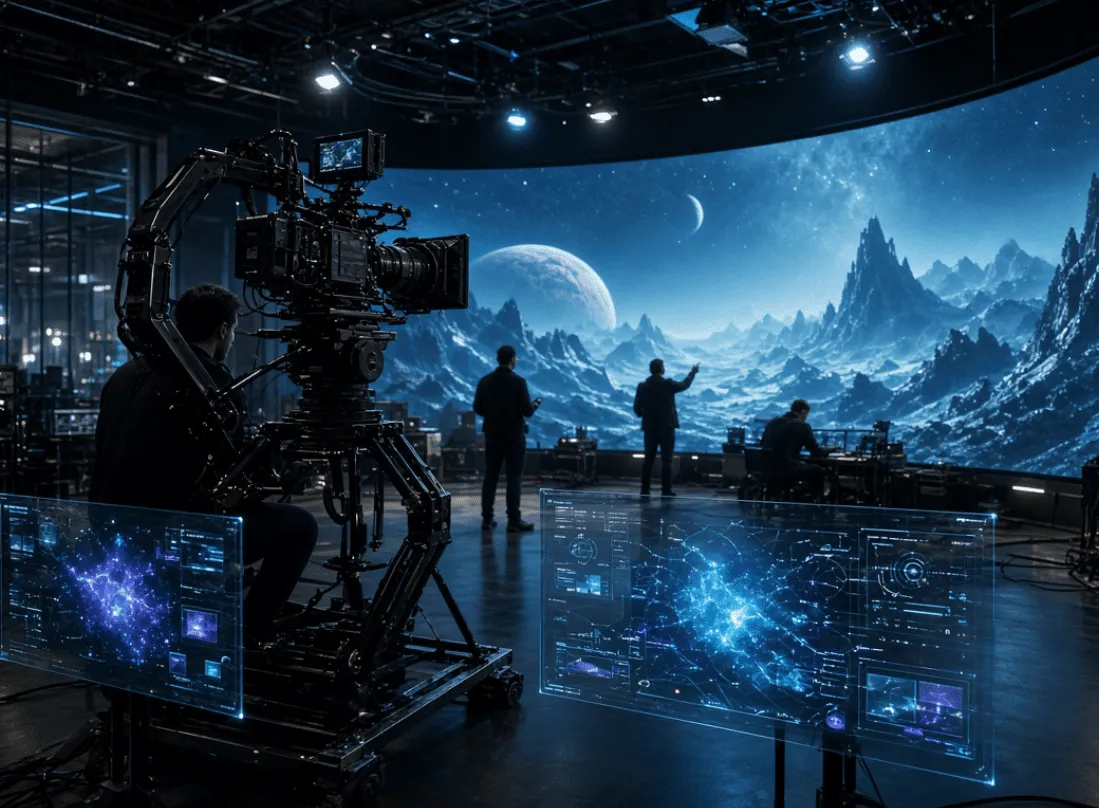
ECHO OF THE CLONE explores AI, humanity and ethical questions through science fiction. Our production approach follows the same principle as the film’s themes: technology changes what is possible, but people remain responsible for what they choose to do with it.
Make Production Language Precise
Our position is that a film should describe its tools by their actual role. Human-written does not mean every visual element was created manually, and AI assistance does not identify how much control a person had over a particular output. The specific decisions matter.
Read our companion article on how AI is changing movie production, explore the creative world behind ECHO OF THE CLONE, or visit LUMERCATCH’s official studio page.
FAQ: AI-Assisted Filmmaking and Human Authors
What is AI-assisted filmmaking?
AI-assisted filmmaking uses artificial intelligence tools for selected tasks inside a production directed and reviewed by human creators.
Does using AI make a film AI-authored?
No. A film may use AI for limited tasks while retaining human-written screenwriting and human creative control.
Are prompts alone enough to establish human authorship?
The U.S. Copyright Office’s January 2025 report states that prompts alone generally do not provide sufficient control over expressive elements under current generally available technology.
Why does human review matter?
Human review checks story meaning, continuity, factual accuracy, rights, performance and technical quality.